
WordPress tutorial
Complete WordPress Tutorial for Beginners (Step-by-Step Guide)
Introduction to WordPress
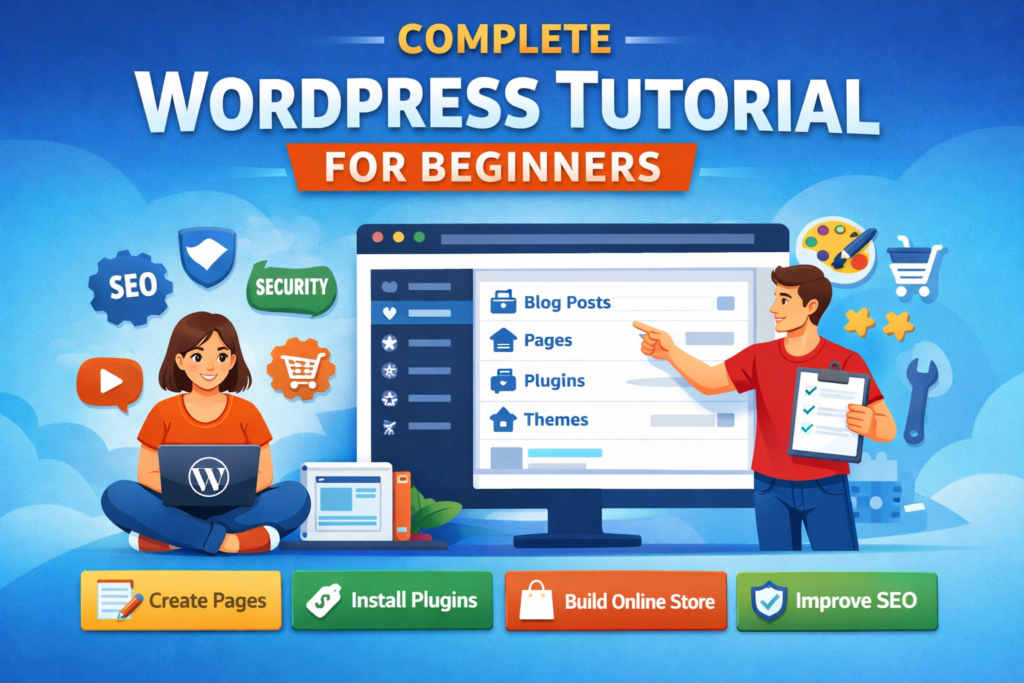
WordPress is the world’s most popular website-building platform. Millions of websites are built using WordPress, from small personal blogs to large business websites. Companies like news agencies, bloggers, freelancers, and eCommerce stores use WordPress to manage their online presence.
WordPress is open-source software, which means it is free to use. You can install it on your hosting server and create any type of website, including:
Business Website
Portfolio Website
Blog Website
eCommerce Store
Educational Website
News Website
Membership Website
There are two versions of WordPress:
WordPress.com – Hosted platform (limited control, beginner-friendly)
WordPress.org – Self-hosted version (full control, recommended for professionals)
If you want full control and professional website development, always choose WordPress.org.
Chapter 1: Requirements to Start WordPress Website
Before creating a WordPress website, you need:
1. Domain Name
A domain name is your website address
2. Web Hosting
Hosting is where your website files are stored online.
Popular hosting companies:
Hostinger
Bluehost
SiteGround
After buying hosting and domain, you can install WordPress.
Chapter 2: Installing WordPress
Most hosting companies provide 1-click WordPress installation.
Steps:
Login to hosting account
Go to control panel (cPanel)
Click “Install WordPress”
Enter website name
Set username & password
Click Install
After installation, you can login at:
yourwebsite.com/wp-admin
Chapter 3: WordPress Dashboard Overview
After login, you will see the WordPress Dashboard.
Important sections:
1. Posts
Used for blog articles.
2. Pages
Used for static pages like:
Home
About
Contact
Services
3. Media
Upload images, videos, PDFs.
4. Appearance
Customize themes, menus, widgets.
5. Plugins
Install extra features.
6. Settings
Control website title, permalink, reading settings.
Chapter 4: WordPress Themes
Themes control your website design.
You can install free themes from WordPress theme directory or premium themes from marketplaces.
Popular themes:
Astra
GeneratePress
OceanWP
How to install theme:
Go to Appearance
Click Themes
Click Add New
Search theme name
Click Install → Activate
Chapter 5: WordPress Plugins
Plugins add extra functionality to your website.
For example:
Contact form
SEO tools
Security
Speed optimization
eCommerce
Popular plugins:
Yoast SEO – SEO optimization
Elementor – Page builder
WooCommerce – Online store
Contact Form 7 – Contact forms
How to install plugin:
Go to Plugins
Click Add New
Search plugin name
Click Install → Activate
Chapter 6: Creating Pages in WordPress
To create a page:
Go to Pages
Click Add New
Enter page title
Add content
Click Publish
Important pages every website should have:
Home
About
Services
Contact
Privacy Policy
Chapter 7: Creating Blog Posts
To create blog post:
Go to Posts
Click Add New
Write title
Add content
Add categories
Add featured image
Click Publish
Tips for blog writing:
Use headings (H1, H2, H3)
Add images
Write SEO-friendly content
Use keywords
Chapter 8: WordPress Permalink Settings
Permalink is your URL structure.
Go to:
Settings → Permalinks
Choose:
Post name
This helps in SEO.
Chapter 9: WordPress SEO Basics
SEO means Search Engine Optimization.
To rank on Google:
Install Yoast SEO
Use focus keywords
Write meta description
Use internal linking
Optimize images
Create sitemap
Submit website to Google Search Console
Chapter 10: Creating eCommerce Website
To create online store, install:
WooCommerce
Steps:
Install WooCommerce
Add products
Set product price
Add product image
Configure payment gateway
Setup shipping
You can sell:
Physical products
Digital products
Services
Chapter 11: WordPress Security
Security is very important.
Tips:
Use strong password
Install security plugin
Keep WordPress updated
Backup website regularly
Popular security plugins:
Wordfence
Sucuri
Chapter 12: WordPress Speed Optimization
Website speed is important for SEO and user experience.
Tips:
Use fast hosting
Install caching plugin
Optimize images
Use CDN
Popular speed plugins:
WP Rocket
W3 Total Cache
Chapter 13: Backup and Maintenance
Always backup your website.
Backup plugins:
UpdraftPlus
Maintenance tasks:
Update themes
Update plugins
Remove unused plugins
Check broken links
Chapter 14: Customization Using Elementor
Elementor is a drag-and-drop page builder.
Features:
Live editing
No coding required
Responsive design
Custom templates
You can design:
Landing pages
Home page
Service page
Portfolio page
Chapter 15: Advanced WordPress Features
Custom Post Types
Child Themes
CSS customization
Membership website
LMS website
Multilingual website