
SEO Tips
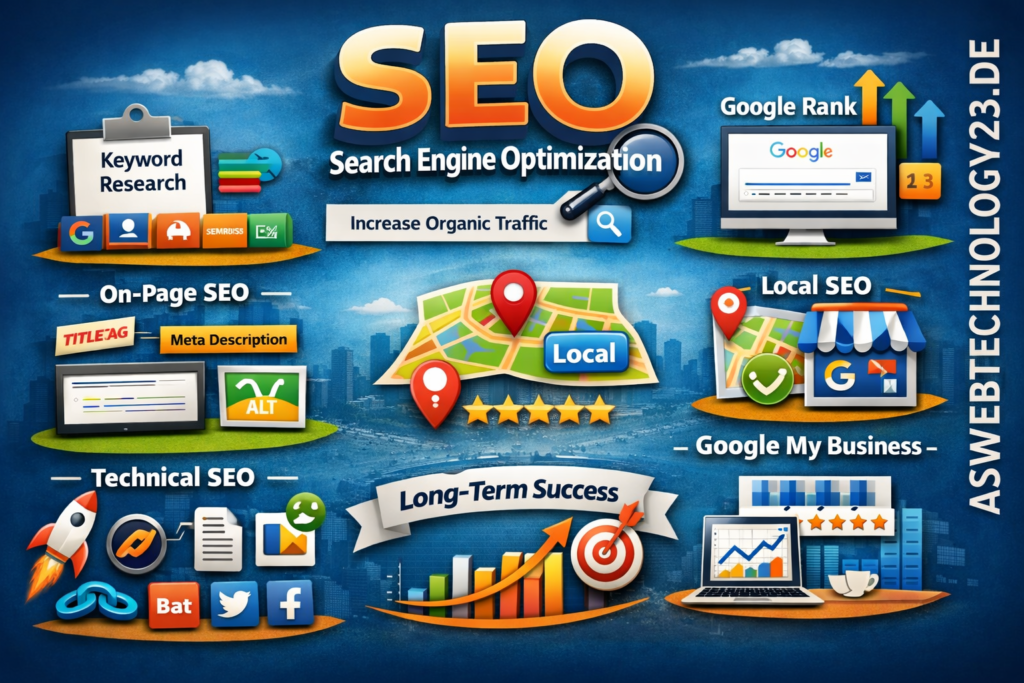
Search Engine Optimization ( लॉकus) is a long-term digital marketing strategy designed to improve a website’s visibility in search engines such as Google, with the primary goal of increasing organic (non-paid) traffic, building brand authority, and generating consistent leads or sales without relying entirely on paid advertising. SEO works by aligning your website’s content, structure, and technical performance with the ranking factors used by search engines. When a user types a query into Google, the search engine scans billions of indexed pages and ranks them based on relevance, quality, authority, usabilityन्त्रण and technical performance. If your website is properly optimized, it has a higher chance of appearing on the first page, which is crucial because most users rarely click beyond the first page of results. The foundation of effective SEO begins with keyword research, which involves identifying the exact words and phrases your target audience types into search engines. Tools such as Googleveno Keyword Planner, Ahrefs, SEMrush, and Ubersuggest help marketers discover search volume, keyword difficulty, competition level, and related search queries. It is generally more strategic to focus on long-tail keywords, which are more specific phrases like “affordable ecommerce website developer in Raipur” instead of broad keywords such as “website developer,” because long-tail keywords typically have lower competition and higher conversion intent. After selecting target keywords, on-page SEO optimization becomes essential. This includes writing a compelling and keyword-rich title tag (ideally 50–60 characters), crafting an engaging meta description (around 150–160 characters), using a clean and readable URL structure, and organizing content with proper heading hierarchy (one H1 tag and multiple H2 and H3 tags). Keywords should be placed naturally within the introduction, subheadings, body content, and conclusion without keyword stuffing, as overuse can lead to penalties. High-quality content is one of the most important ranking factors; it should be original, informative, well-structured, and designed to solve the user’s problem better than competing pages. Internal linking is another critical on-page factor, as it helps distribute page authority across your website and improves user navigation. Image optimization also plays a role in SEO; images should have descriptive file names, relevant ALT text, and compressed sizes to ensure faster loading speeds. Technical SEO focuses on backend improvements that enhance crawlability,pdata indexing, and performance. Website speed is a significant ranking factor, and tools like Google PageSpeed Insights can analyze performance issues and suggest improvements such as enabling caching, minimizing CSS and JavaScript files, using a content delivery network (CDN), and choosing reliable hosting. Mobile-friendliness is equally critical because Google uses mobile-first indexing, meaning it primarily evaluates the mobile version of a website for ranking purposes; compatibility can be checked using Google Mobile-Friendly Test. Implementing HTTPS with an SSL certificate builds trust and protects user data. Submitting an XML sitemap through Google Search Console helps search engines discover and index pages more efficiently, while a properly configured robots.txt file guides crawlers on which pages to access or avoid. Off-page SEO focuses on building authority and trust through backlinks, which are links from other websites pointing to your site. High-quality backlinks from reputable and relevant domains signal credibility to search engines and significantly impact rankings. Effective backlink strategies include guest posting, digital PR, niche directory submissions, and creating shareable content that naturally attracts links. Social media presence, while not a direct ranking factor, enhances brand visibility and can drive traffic that indirectly benefits SEO; platforms like YouTube can generate additional exposure since it is one of the largest search engines globally. Local SEO is crucial for businesses targeting specific geographic areas. Creating and optimizing a profile on Google Business Profile ensures your business appears in local map results, especially for “near me” searches. Maintaining consistent Name, Address, and Phone number (NAP) information across directories, collecting genuine customer reviews, and publishing localized content improve local rankings. Content marketing strengthens SEO by establishing topical authority. Publishing consistent, in-depth blog posts that address common customer questions, industry trends, comparisons, and case studies signals expertise and relevance. Implementing structured data markup (schema) can enhance search listings with rich snippets such as FAQs, star ratings, and product details. Monitoring performance through analytics platforms like Google Analytics allows businesses to track traffic sources, user behavior, bounce rates, and conversions, enabling data-driven optimization. Avoiding common SEO mistakes—such as duplicate content, thin content, spammy backlinks, slow-loading pages, broken links, and poor user experience—is essential for sustainable growth. SEO is not an overnight solution but a strategic, continuous process that requires patience, experimentation, and consistent improvement. By combining strong keyword research, high-quality content creation, technical excellence, authoritative link building, and ongoing performance analysis, businesses can achieve long-term organic growth, increased brand credibility, and steady lead generation without depending entirely on paid advertisements.
Complete SEO Guide 2026
Beginner se Advanced Tak – Full Practical Strategy (Step-by-Step)
1. SEO Kya Hota Hai? (Introduction)
SEO ka full form hai Search Engine Optimization.
Iska matlab hota hai apni website ko is tarah optimize karna ki wo search engine me top position par aaye.
Sabse bada search engine hai 👉 Google
India me 90% se zyada log Google use karte hain, isliye agar aap Google me rank kar gaye to traffic automatically badh jayega.
SEO Kyu Zaroori Hai?
Free traffic milta hai
Brand trust banta hai
Long term result deta hai
Paid ads se sasta padta hai
Local customers milte hain
Agar aap website development, WooCommerce ya graphic design service dete ho, to SEO aapke liye gold mine hai.
2. SEO Kaise Kaam Karta Hai?
Search engine 3 main process follow karta hai:
1. Crawling
Google bots aapki website visit karte hain.
2. Indexing
Website ka data Google ke database me save hota hai.
3. Ranking
Google decide karta hai kaunsi website top par aayegi.
Ranking factors 200+ hote hain, lekin main important factors:
Content quality
Keyword relevance
Backlinks
Website speed
Mobile friendliness
User experience
3. SEO Ke Types
1. On-Page SEO
Website ke andar ki optimization.
2. Off-Page SEO
Website ke bahar ki activities (backlinks, promotion).
3. Technical SEO
Backend optimization (speed, sitemap, indexing).
4. Local SEO
Local area me rank karne ke liye.
4. Keyword Research – SEO Ki Foundation
Agar keyword galat choose kiya to SEO fail.
Keyword Research Tools
Google Keyword Planner
Ubersuggest
Ahrefs
SEMrush
Keyword Types
1. Short Tail
Example: website design
2. Long Tail
Example: affordable website design in Raipur
👉 Long tail keyword par competition kam hota hai.
5. On-Page SEO Complete Guide
1. Title Tag Optimization
Title me main keyword jarur ho.
Length: 50–60 characters.
Example:
Affordable Website Development in Raipur | AS Web Technology
2. Meta Description
Length: 150–160 characters
Clear CTA add kare.
3. Heading Structure
H1 – 1 hi use kare
H2 – sub topics
H3 – sub headings
4. URL Structure
❌ example.com/p=123
✅ example.com/website-design-raipur
5. Keyword Placement
Keyword natural way me use kare:
First paragraph
Headings me
Conclusion me
Image ALT text me
6. Internal Linking
Apni hi website ke pages ko connect kare.
Example:
“Website design ke baare me janne ke liye hamari service page dekhe”
7. Image SEO
File name descriptive ho
ALT text likhe
Size compress kare
6. Technical SEO Detailed Guide
1. Website Speed
Speed check kare:
Google PageSpeed Insights
Speed improve karne ke liye:
Image compress kare
Cache use kare
CDN use kare
Lightweight theme use kare
2. Mobile Friendly
Check kare:
Google Mobile-Friendly Test
3. Sitemap
XML sitemap banaye aur submit kare:
Google Search Console
4. Robots.txt
Search bots ko guide karta hai.
5. SSL Certificate
HTTPS website trust build karta hai.
7. Off-Page SEO Strategy
1. Backlink Building
Quality backlink zaroori hai.
Backlink Sources:
Guest posting
Business directories
Blog commenting
Profile backlinks
2. Social Media SEO
Facebook page
Instagram
LinkedIn
YouTube
YouTube world ka 2nd biggest search engine hai 👉 YouTube
3. Guest Posting Strategy
High DA websites par article publish kare.
8. Local SEO (Aapke Business Ke Liye Important)
Step 1: Google Business Profile
Banaye:
Google Business Profile
Complete details fill kare:
Address
Phone number
Website
Photos
Reviews
Step 2: Local Keywords
Example:
Website developer in Raipur
WooCommerce expert in Tikrapara
Step 3: Customer Reviews
Positive reviews ranking boost karta hai.
9. Content Marketing Strategy
Blog Frequency
Week me 1 blog likhe.
Content Types
How-to guides
List articles
Case studies
Comparison articles
10. Advanced SEO Strategies
1. Schema Markup
FAQ schema use kare.
2. Core Web Vitals
LCP
CLS
FID
3. Topical Authority
Ek niche choose kare aur us par 20–30 blog likhe.
Example:
Agar aap WooCommerce service dete ho to:
WooCommerce kya hai
WooCommerce vs Shopify
WooCommerce plugin list
WooCommerce speed optimization
11. SEO Mistakes Jo Avoid Karni Chahiye
Keyword stuffing
Duplicate content
Cheap backlinks
Slow hosting
Copied articles
12. SEO Tools Complete List
Google Analytics
Google Search Console
Ahrefs
SEMrush
13. 6 Month SEO Action Plan
Month 1
Keyword research
Website audit
On-page optimization
Month 2
Blog writing start
Sitemap submit
Month 3
Backlink building start
Month 4
Guest posting
Month 5
Content cluster strategy
Month 6
Analyze & improve